The Data Processing Cycle: A Complete Diagram and Explanation
The Data Processing Cycle: A Complete Diagram and Explanation
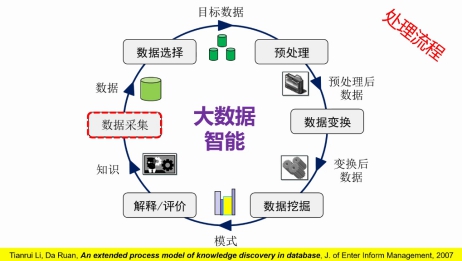
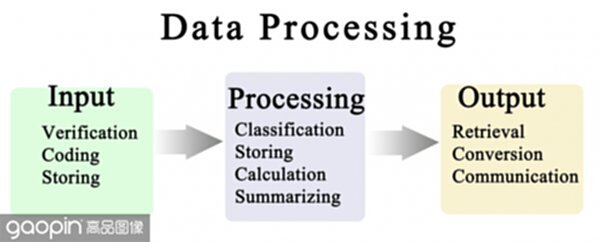
The data processing cycle is the sequence of steps through which raw data is collected, transformed, and turned into meaningful information. Whether handled manually or by a computer system, the cycle follows a consistent logic that organizations rely on for decision-making, reporting, and automation.
Diagram of the Data Processing Cycle
┌─────────────────────┐
│   1. COLLECTION     │
│ (Acquisition/Capture)│
└──────────┬──────────┘
│
▼
┌─────────────────────┐
│ 2. PREPARATION /    │
│   VALIDATION        │
└──────────┬──────────┘
│
▼
┌─────────────────────┐
│   3. INPUT          │
└──────────┬──────────┘
│
▼
┌─────────────────────┐
│   4. PROCESSING     │
│ (Transformation)    │
└──────────┬──────────┘
│
▼
┌─────────────────────┐
│  5. OUTPUT /        │
│  INTERPRETATION     │
└──────────┬──────────┘
│
▼
┌─────────────────────┐
│   6. STORAGE        │
└──────────┬──────────┘
│
▼
┌─────────────────────┐
│  (Feedback Loop:    │
│ data quality,       │
│ adjustments)        │
└─────────────────────┘
Stage 1: Collection (Data Acquisition)
Raw data is captured from source systems, sensors, forms, transactions, surveys, or logs. The goal is to gather relevant, accurate, and timely data. Poor collection inevitably produces poor results — the classic "garbage in, garbage out" problem.
Key activities:
- Identifying data sources
- Recording or extracting raw records
- Timestamping and tagging source information
Stage 2: Preparation / Validation
Before data enters the core system, it is cleaned and checked. This stage filters duplicates, corrects format inconsistencies, verifies completeness, and removes errors. Data validation rules (range checks, format checks, referential integrity) are applied here.
Key activities:
- Data cleaning and standardization
- Error detection and correction
- Duplicate removal and consistency checks
Stage 3: Input
Cleaned data is entered into the processing system — either entered manually through forms, transferred via APIs, or batch-loaded from files. Input formats are converted into a structure the processing engine can handle.
Key activities:
- Encoding or importing into the system
- Mapping to internal schemas
- Confirming successful entry
Stage 4: Processing (Transformation)
This is the computational heart of the cycle. Data is sorted, aggregated, calculated, joined, filtered, modeled, or analyzed according to business rules and algorithms. Processing may be batch (scheduled) or real-time (streaming).
Typical operations:
- Sorting and classifying
- Aggregation and summarization
- Mathematical calculations and statistical analysis
- Joining datasets and applying business logic
Stage 5: Output / Interpretation
Processed data becomes information — reports, dashboards, files, visualizations, alerts, or machine-readable results. The output is formatted for its intended audience, whether human decision-makers or downstream systems.
Typical outputs:
- Reports and dashboards
- Machine-readable datasets
- Notifications and triggers
Stage 6: Storage
Results and intermediate states are stored for future retrieval, auditing, reuse, or further processing. Storage can be local, cloud-based, or distributed. Proper storage design ensures accessibility, security, and durability.
Storage considerations:
- Retention policies and archival
- Access control and encryption
- Indexing for fast retrieval
The Feedback Loop
A mature data processing cycle includes feedback: output is evaluated against goals, and data quality issues are traced back to collection or preparation. This loop improves future cycles and keeps the pipeline reliable.
Classification of Data Processing Methods
| Method | Description | Example |
|---|---|---|
| Manual | Performed by hand | Hand-written ledgers |
| Mechanical | Simple mechanical aids | Calculating machines |
| Electronic (batch) | Scheduled bulk processing | Payroll runs |
| Electronic (real-time) | Immediate processing | Point-of-sale transactions |
| Distributed / parallel | Split across multiple nodes | Big data analytics |
Why the Cycle Matters
Understanding the data processing cycle helps organizations design robust pipelines, locate failures when results are wrong, and invest in the stages most prone to error — usually collection and preparation. Each stage adds value but also risk; the discipline of the cycle keeps the transformation from raw data to actionable insight trustworthy and reproducible.
如若转载,请注明出处:http://www.newbeedata.com/product/33.html
更新时间:2026-11-01 01:26:23